
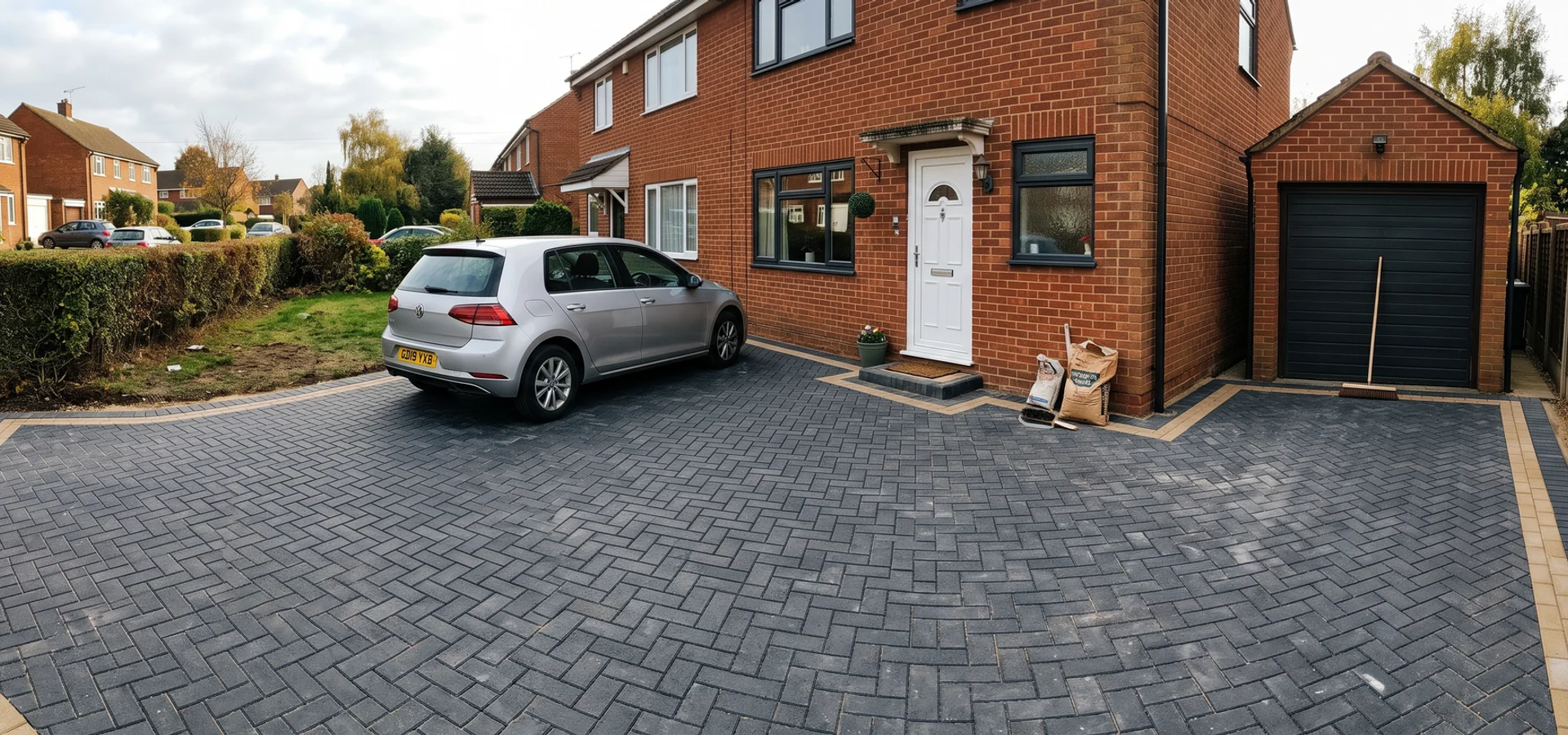
Bespoke Block Paving Driveways Across Gloucester
Custom block paving driveways in a wide range of colours and patterns, built on a properly compacted sub-base to last.
- 30+ years' experience
- No deposit, pay on completion
- Fully insured and guaranteed
- 4.83/5 on TrustATrader
Free no-obligation survey · No deposit required
- 4.83/5 on TrustATrader
- Fully Insured & Guaranteed
- 24-Hour Enquiry Response
- 30+ Years Experience
- No deposit — pay on completion
What is a block paving driveway?
A block paving driveway is a surface built from individual interlocking concrete blocks, bedded on sand over a compacted stone base and held in place by solid edges. Nothing is glued down. The strength comes from the way the blocks lock against each other and from what sits underneath them, which is why the groundwork matters more than the block you pick.
LayPave installs block paving driveways across Gloucester, Cheltenham and the wider Gloucestershire area. Choose from a huge range of block colours, sizes and laying patterns to suit a traditional or contemporary home. Every drive is built the right way, with full excavation, an MOT Type 1 sub-base, a geotextile membrane, sharp sand bedding, solid edge restraints and kiln-dried jointing sand, so it stays level and interlocked for decades.
As with all our work there is no upfront payment. You pay only when the job is finished and you are happy with it.
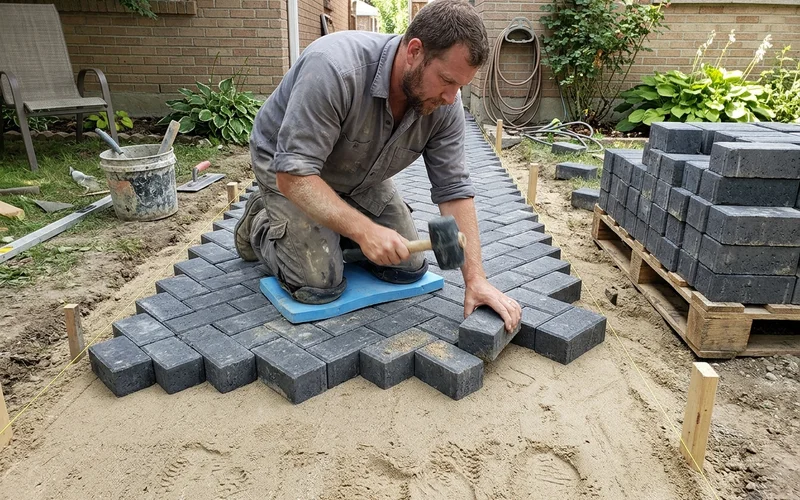
What’s included
- Full excavation of the old surface and removal of the spoil
- A geotextile membrane to stop the sub-base sinking into soft ground
- MOT Type 1 sub-base laid and compacted in layers, to the depth your ground needs
- Concrete edge restraints (haunched, not just bedded) around every open edge
- A screeded sharp sand bedding layer at a consistent depth
- Blocks cut in cleanly with a block splitter, not chipped in with a hammer
- Kiln-dried jointing sand worked in and the whole drive run over with a plate compactor
- Drainage falls set away from the house, plus channel drainage where the site needs it
How we build it
The dig is the part nobody sees and the part that decides how long the drive lasts. We take out enough ground to get the finished blocks sitting at the right level against your threshold and your kerb, which usually means 200mm to 300mm of excavation for a domestic drive. Anything soft or waterlogged comes out too.
The membrane goes down first, then MOT Type 1 sub-base in compacted layers. Compacting the whole depth in one pass looks the same on day one and settles into ruts by year two, so we build it up properly. Edge restraints are set in concrete before any blocks go down, because a block drive with weak edges spreads sideways and opens up joints.
The bedding layer is screeded sharp sand at a consistent depth. Blocks are laid to a string line in the pattern you have chosen, herringbone for driveways where vehicle loads are highest, stretcher bond or a mixed-size range where you want a softer look. Cuts around manholes and curves are done with a block splitter for a clean face. The drive is then jointed with kiln-dried sand and vibrated with a plate compactor, which beds the blocks and locks the joints, and we top the sand up until the joints stay full.
Where a drive needs to be fully permeable we lay permeable block paving over a clean, open-graded stone base so water drains straight through the joints instead of running to the road. That approach follows the same principles set out in the BS 7533 paving standard we work to, and it usually keeps you clear of planning permission.
Colours, patterns and borders
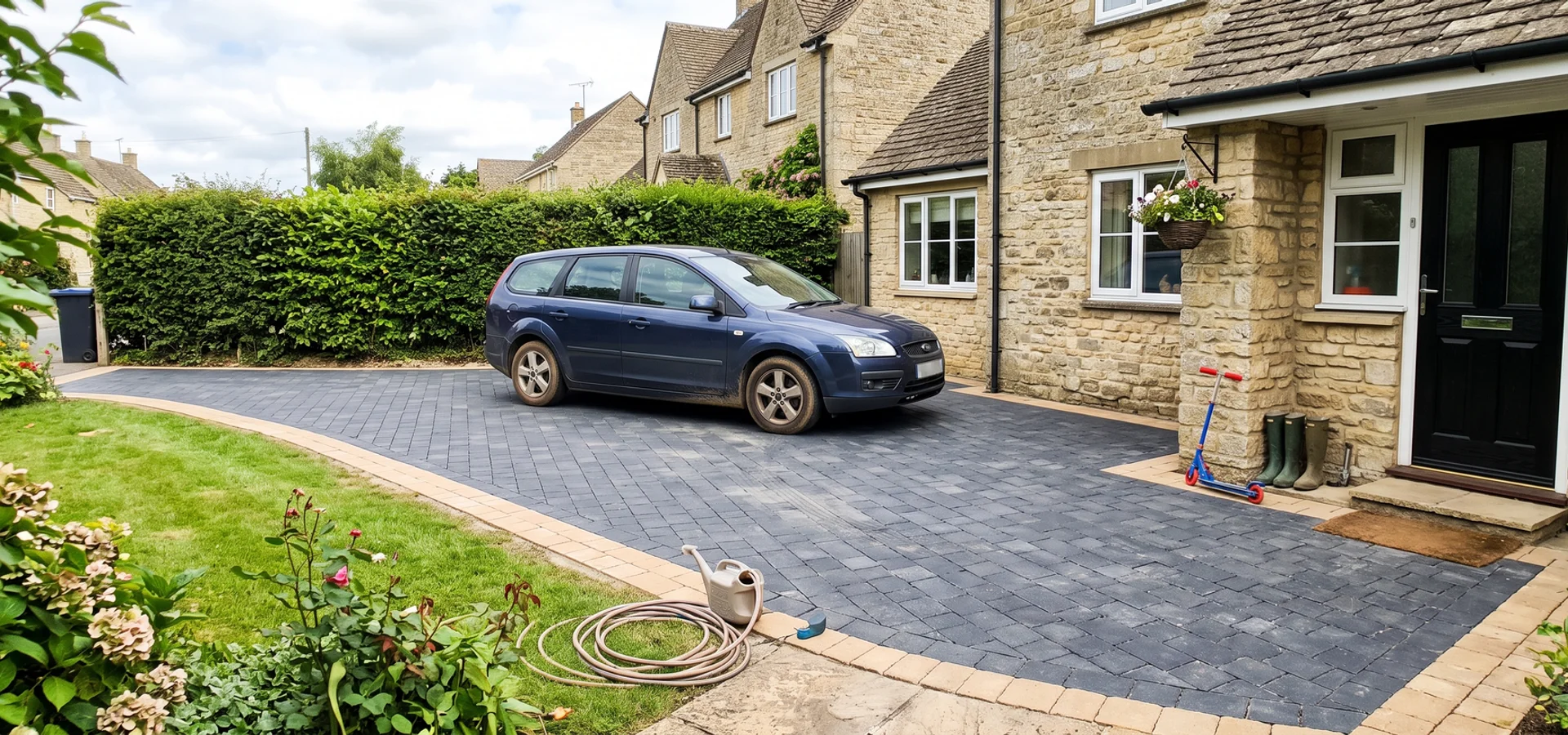
Block paving is the most flexible surface we lay. You can have charcoal blocks with a buff border, a tumbled block for an older cottage, a large-format modern block for a new build, or a circle feature in the middle of a turning area. Decorative border courses in a contrasting colour are the cheapest way to make a drive look designed rather than just surfaced, and they also give a tidy line to cut into.
If you are weighing block paving up against a smooth resin finish or a plain tarmac drive, our guide comparing block paving, resin and tarmac sets the three side by side on cost, drainage and upkeep.
Looking after it
Block paving is low maintenance rather than no maintenance. Sweep it, keep the joints topped up with kiln-dried sand every few years, and pull weeds out of the joints before they get established. A pressure wash every couple of years is plenty, on a low setting and a wide fan so you do not blast the jointing sand out.
New blocks often develop a white bloom in the first few months. That is efflorescence, salts working out of the concrete as it cures, and modern blocks are made with better efflorescence resistance than they used to be. It fades on its own. Leave it alone.
If an area does dip years down the line, usually where a drain has been dug out or a vehicle has been parked on a soft edge, block paving is the one surface you can lift and relay in a day without it showing. That is exactly the kind of job our driveway repairs and resurfacing team handles, and on a block drive it rarely needs more than a localised lift.
Included as standard on every job
- Any block colour, size and laying pattern
- Fully excavated and compacted MOT Type 1 sub-base
- Geotextile membrane and concrete edge restraints
- Decorative borders and feature patterns available
- Fully insured and guaranteed workmanship
Pricing
What do block paving driveways cost in Gloucester?
Block paving is priced per project after a free survey. Size, access, how much old surface has to come out and the block you choose all move the number, so a phone estimate would only ever be a guess.
All work is quoted after a free, no-obligation site survey. No deposit is required at any point.
What the quote covers
- Excavation and removal of the old surface
- MOT Type 1 sub-base, compacted in layers
- Geotextile membrane and concrete edge restraints
- Blocks, bedding sand and kiln-dried jointing sand
- Drainage falls set away from the house
- Site clearance and waste removal
What moves the price
- Area in square metres and the shape of the drive
- Depth of dig needed for the ground you have
- Block range, size and laying pattern
- Border courses and any feature detail
- Drainage work such as an ACO channel or soakaway
- Access for a digger and grab lorry
Try our free Driveway Cost Estimator
Get a ballpark cost for a new driveway based on its size and the material you're considering. For a firm price, book a free survey.
Get an instant estimateWhy us
Why choose LayPave for block paving?
The base is where we spend the time
Most failed block drives sink because the sub-base was thin. We dig to the depth the ground needs and compact in layers, not all in one go.
No deposit, ever
You pay nothing up front. The money changes hands when the drive is finished, swept and you are happy with it.
30+ years of laying blocks
Gus has been setting out herringbone, stretcher bond and circle patterns across Gloucestershire since the nineties, and still runs every job.
Insured and guaranteed
Public liability cover on every job, guaranteed workmanship, and the TrustATrader Guarantee behind the 4.83 out of 5 rating.
How LayPave compares
Against the way this work is commonly quoted and delivered in Gloucestershire.
| Feature | Typical provider | LayPave |
|---|---|---|
| Deposit to start | 20-50% up front | £0 - you pay on completion |
| Sub-base | Whatever is quickest | MOT Type 1, compacted in layers |
| Quotation | Single lump-sum figure | Itemised, after a free site survey |
| Cover | Varies by trader | Fully insured, TrustATrader guaranteed |
| Experience | Mixed | 30+ years, owner on site |
The process
How our block paving work runs
- 01
Free survey
We come out, measure up, check levels and drainage, and talk through blocks and patterns with you. No charge, no obligation.
- 02
Itemised quote
You get a written, itemised quotation covering excavation, sub-base, blocks and edgings, so you can see exactly what you are paying for.
- 03
Groundwork
We dig out, cart the spoil away, lay and compact the MOT Type 1 sub-base and set the concrete edge restraints to the right falls.
- 04
Laying and finish
Blocks go down over screeded sharp sand, get cut in with a block splitter, then compacted and jointed with kiln-dried sand. You pay when you are happy.
Ready to talk about your block paving project?
Free site survey, an itemised quote and no deposit. Honest advice either way.
Our work
Block Paving projects across Gloucestershire
Click any photo to see it larger.
Reviews
What customers say about our block paving work
4.83 out of 5 on TrustATrader, from dozens of homeowners across Gloucestershire.
Gus and the team laid our block paving drive in Quedgeley and it looks fantastic. What sold us was not paying a penny until it was finished, total peace of mind. Tidy, on time and no fuss.
Free survey, a fair quote and no deposit asked for, exactly as promised. The block work and the new steps are spot on. Would recommend to anyone in Gloucestershire.
They explained the sub-base and the drainage falls before they started, which no one else bothered to do. Two years on it is still dead level.
FAQs
Block Paving questions, answered
How long does a block paving driveway take to lay?
A typical single or double drive takes three to five working days, depending on the size, how deep we have to dig and the weather. We give you a realistic day count with the quote rather than an optimistic one.
How long will block paving last?
Block paving laid on a properly compacted MOT Type 1 sub-base with solid edge restraints typically lasts 20 years or more. The blocks themselves rarely wear out. What fails on cheap jobs is the base underneath them.
Do I need planning permission for a block paved driveway?
If the drive is over five square metres and drains straight onto the road, you may need permission or a drainage solution. Permeable block paving or a soakaway usually keeps you within permitted development. We sort the drainage as part of the job and explain what applies to your property at the survey.
What is the white powder that appears on new blocks?
That is efflorescence, a natural salt bloom that comes out of concrete blocks as they cure. It is not a fault and it weathers off on its own within a few months. Do not attack it with acid cleaners.
Can you match blocks to an existing drive or patio?
Usually, yes. Bring us a spare block or we will take a photo at the survey and match the range, size and colour as closely as the manufacturer still supplies. Where an exact match has been discontinued we will suggest a deliberate contrast border instead.
Do you take a deposit for materials?
No. There are no upfront payments or deposits on any LayPave job, including block paving. You settle the invoice once the work is finished and you are satisfied.
Ready to book your block paving job?
Free site survey, an itemised quote and no deposit. We aim to reply to online enquiries within 24 hours.
- Free site survey and itemised quote
- No deposit — pay on completion
- Fully insured and guaranteed work