
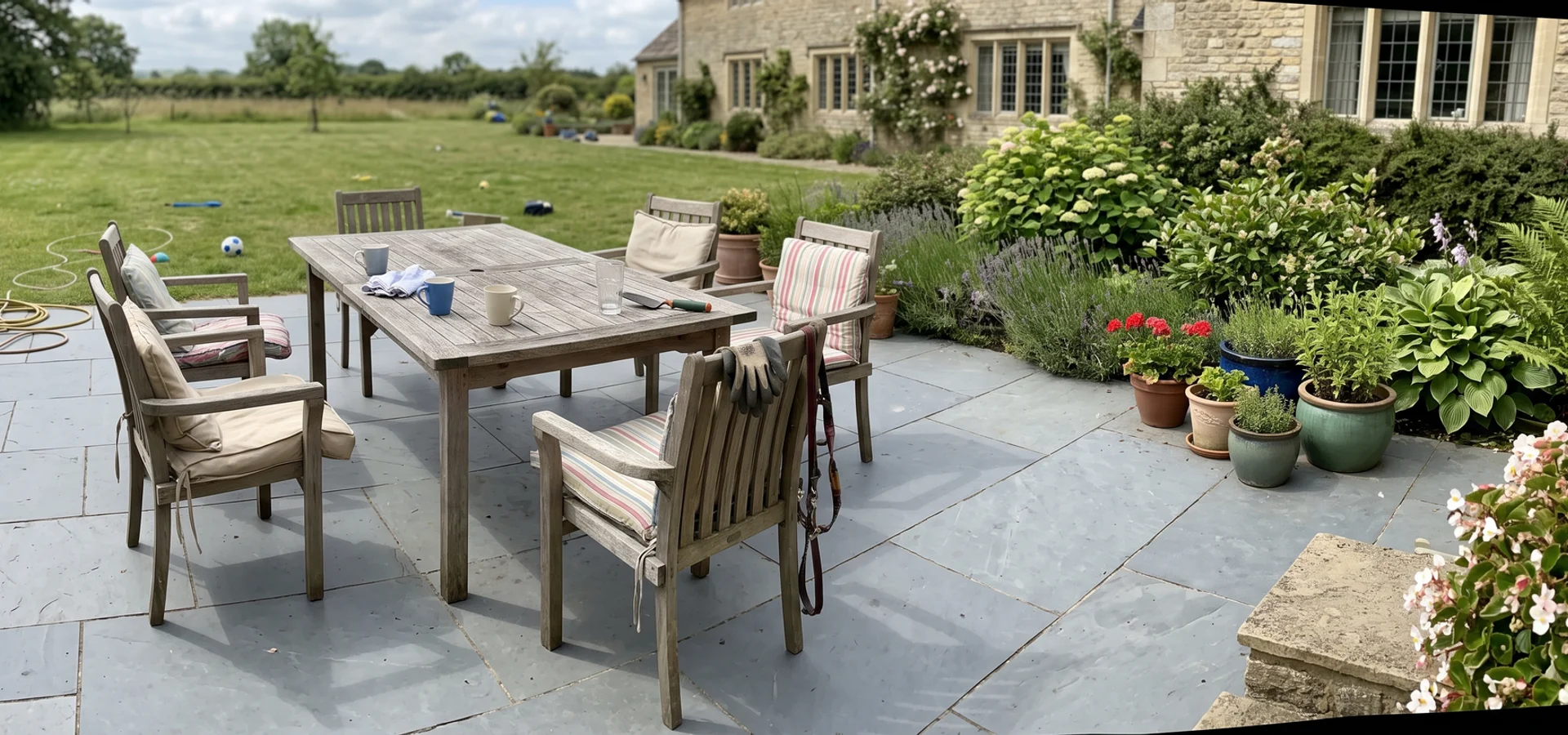
Beautiful Patios & Garden Paving in Gloucestershire
Custom patios and garden slabbing in porcelain, sandstone and more to enhance your outdoor living space.
- 30+ years' experience
- No deposit, pay on completion
- Fully insured and guaranteed
- 4.83/5 on TrustATrader
Free no-obligation survey · No deposit required
- 4.83/5 on TrustATrader
- Fully Insured & Guaranteed
- 24-Hour Enquiry Response
- 30+ Years Experience
- No deposit — pay on completion
What goes into a patio that lasts
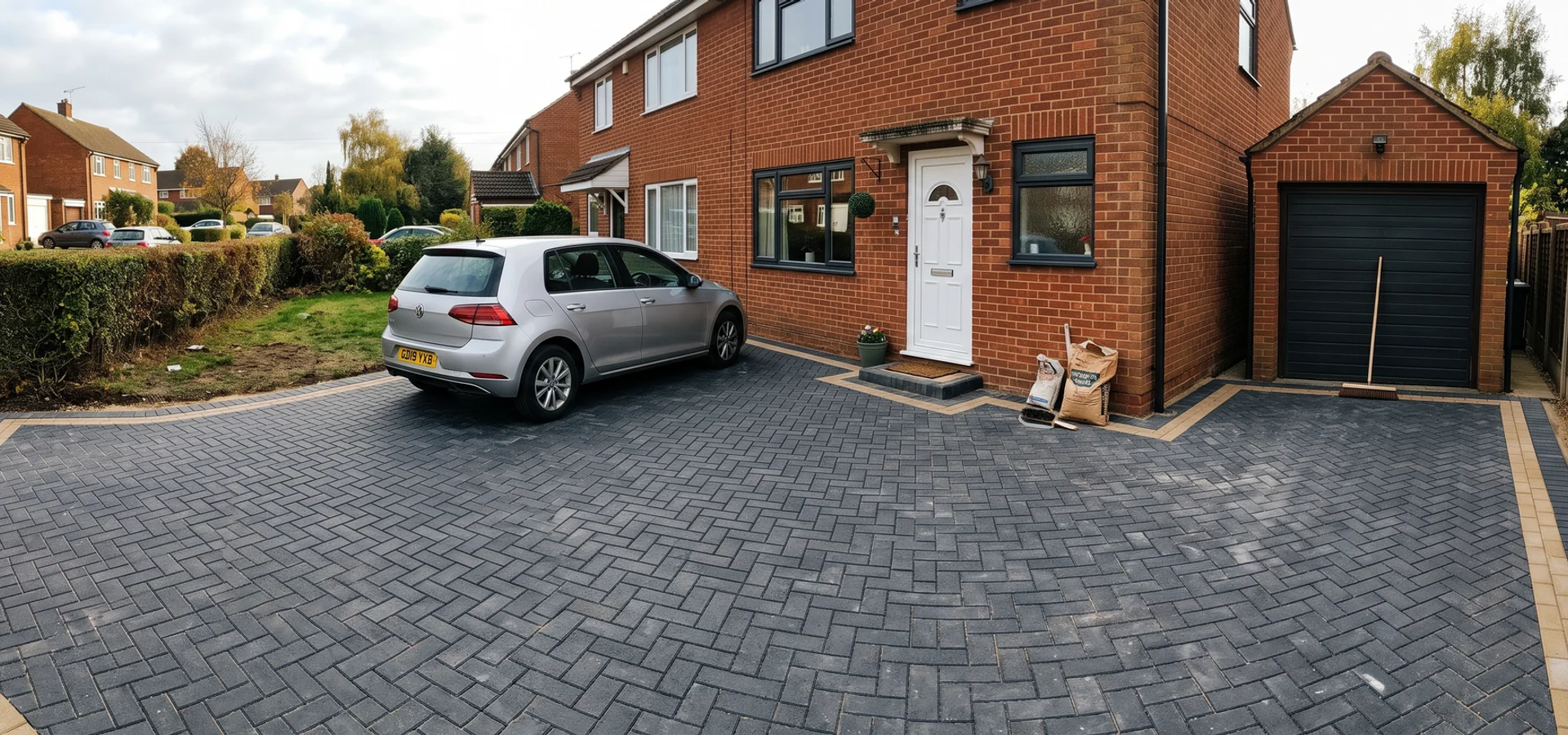
A patio is a small piece of groundwork with a nice surface on top. The slabs are what you look at, but the load-bearing patio sub-base underneath, the falls, and the mortar bed are what decide whether it is still flat and quiet under your feet in ten years. It is the same principle we build our block paving driveways on, scaled to what a garden has to carry rather than a car.
LayPave designs and builds patios and garden paving that turn a tired back garden into a proper outdoor living space. Choose from porcelain paving slabs, natural Indian sandstone and other quality slabs, laid on a full mortar bed over a solid sub-base with correct drainage falls so your patio stays flat and free-draining for years.
Fully insured and guaranteed, with no upfront payment.
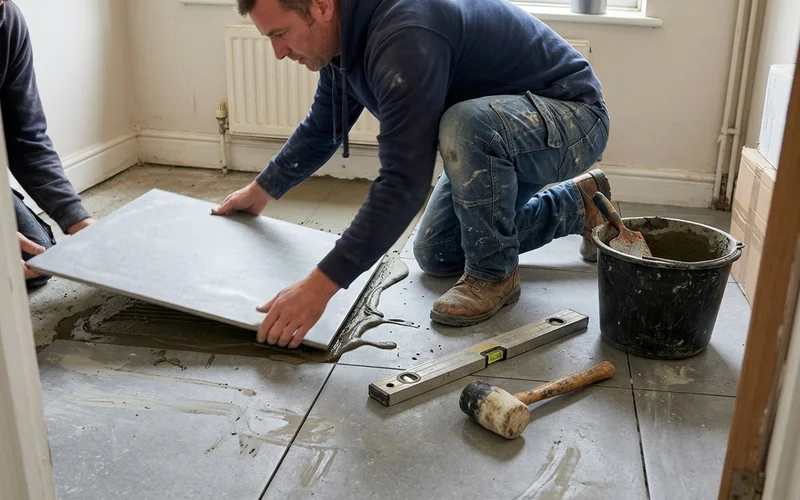
What’s included
- Lifting and removing the old patio, concrete or turf
- A compacted sub-base sized for the use the area will get
- Drainage falls set away from the house and clear of the damp course
- A full wet mortar bed under every slab, no spot bedding
- SBR bonding agent in the mix and a slurry primer on the back of porcelain
- Polymer mortar jointing, pointed and cleaned off properly
- Steps, retaining edges and brick walls where the design calls for them
Slab choice, plainly
Porcelain is dense, frost resistant and almost non-porous. It does not fade, moss struggles to get a grip on it, and most ranges carry a non-slip R11 rating. It comes in large formats with a factory-consistent size, which is what gives that tight, modern joint line. The trade-off is preparation: porcelain will not bond to mortar on its own, so the back of every slab gets a slurry primer before it goes down. Skip that step and the slabs come loose. Plenty do.
Indian sandstone is warmer in tone, varies from slab to slab, and suits older houses and cottage gardens. It is more porous, so it wants sealing in a shaded spot and a wash once a year, but it is kinder on the budget and it ages well.
Other natural stone such as limestone or granite sits between the two. We bring samples to the survey so you can see them against your brickwork rather than guessing off a screen.
How we build it
Old surface up first, and it usually tells us something. Cracked concrete over soft fill, or a patio that was laid straight onto soil, explains why the levels moved. Then the sub-base goes in and gets compacted, at a depth matched to what the patio will carry, and the falls are set to move water away from the house and towards a border, a channel or a soakaway.
Slabs are laid on a full wet mortar bed with an SBR bonding agent in the mix, each one levelled individually and tapped down to the string line. Cuts around downpipes, manholes and steps are done properly rather than filled with a wedge. Joints are finished with polymer mortar jointing, which stays flexible, resists weeds and does not wash out the way a dry brushed-in mix does.
Where the garden drops away, we build retaining edges or brick steps to hold the level. Doing that as part of the same job means the coursing and the finished heights work with the patio rather than against it. Plenty of customers have the patio done at the same time as a new resin driveway at the front, which saves a second mobilisation and keeps the materials talking to each other.
Getting the most out of the space
Think about how you actually use the garden before settling on a shape. A patio sized around a table and six chairs needs more room than people expect, roughly 3.5 by 3.5 metres before anyone can push a chair back. A second smaller area at the far end catching the evening sun is often better value than one enormous slab of paving by the back door.
Border planting softens the edge, a step down to the lawn stops the patio feeling like a raft, and running the same slab through to a path keeps the garden reading as one space. We will sketch options at the survey. There is no charge and no obligation, and if we think a smaller patio would suit the garden better, we will say so.
Included as standard on every job
- Porcelain, sandstone and natural stone slabs
- Designed to suit your garden and home
- Full mortar bed on a solid, free-draining base
- Steps, borders and feature areas available
- Fully insured and guaranteed workmanship
Pricing
What do patios & paving cost in Gloucester?
Patios are quoted per project after a free survey. Slab choice makes a big difference, but so does what we find under the old patio and how far the material has to be barrowed through the house or side gate.
All work is quoted after a free, no-obligation site survey. No deposit is required at any point.
What the quote covers
- Lifting and removing the old patio or turf
- Compacted sub-base and drainage falls away from the house
- Full wet mortar bed under every slab
- SBR bonding agent or slurry primer where the slab needs it
- Polymer mortar jointing
- Site clearance and waste removal
What moves the price
- Area in square metres and the shape of the patio
- Slab type, size and thickness
- Steps, retaining edges or level changes
- Access for materials and for taking the old patio away
- Drainage detail where the ground holds water
- Any brick walls or edging built as part of the job
Why us
Why choose LayPave for patios?
Full bed, never five dabs
Every slab sits on a full wet mortar bed. Spot bedding on five blobs is quicker and it is why so many patios ring hollow and crack within a couple of winters.
Falls and damp course get checked
A patio must fall away from the house and sit clear of the damp course. We check both at survey, before anyone talks about slab colours.
No deposit, ever
Porcelain is not cheap to buy in, and we still do not ask you for a penny up front. You pay when the patio is finished and swept.
Masonry in house
Steps, retaining edges and brick walls are built by the same team, so the patio and everything around it line up properly.
How LayPave compares
Against the way this work is commonly quoted and delivered in Gloucestershire.
| Feature | Typical provider | LayPave |
|---|---|---|
| Deposit to start | 20-50% up front | £0 - you pay on completion |
| Slab bedding | Spot bedded on mortar dabs | Full wet mortar bed under every slab |
| Porcelain preparation | Laid straight onto mortar | Slurry primer on the back of every slab |
| Jointing | Brushed-in dry mix | Polymer mortar, pointed and cleaned off |
| Cover | Varies by trader | Fully insured, TrustATrader guaranteed |
The process
How our patios work runs
- 01
Free survey
We measure the space, check levels against the damp course, look at where water currently goes and talk through slab options and sizes.
- 02
Design and quote
We set out a shape and layout that suits the garden, then send an itemised quotation covering groundwork, slabs, jointing and any steps.
- 03
Groundwork
Old patio or turf comes up, the sub-base goes in and is compacted, and the drainage falls are set running away from the house.
- 04
Laying and jointing
Every slab goes onto a full wet mortar bed, primed where needed, levelled individually, then jointed with polymer mortar and cleaned off.
Ready to talk about your patios project?
Free site survey, an itemised quote and no deposit. Honest advice either way.
Our work
Patios projects across Gloucestershire
Click any photo to see it larger.
Reviews
What customers say about our patios work
4.83 out of 5 on TrustATrader, from dozens of homeowners across Gloucestershire.
Free survey, a fair quote and no deposit asked for, exactly as promised. New patio and steps in the back garden are spot on. Would recommend to anyone in Gloucestershire.
Big porcelain slabs, dead flat, and they sorted the fall so the water runs to the border instead of back at the kitchen door like the old one did.
They took the old cracked concrete out, built two steps down to the lawn and finished it all in under a week. Garden feels twice the size now.
FAQs
Patios questions, answered
How long does a new patio take to build?
Most domestic patios take three to five working days. Add a day or two for steps, a retaining edge or a brick wall, and a little longer if the old patio has to be broken out and barrowed through a narrow side gate.
Porcelain or Indian sandstone, which should I choose?
Porcelain is dense, colour-fast and very easy to keep clean, and it comes in large formats with a consistent size. Indian sandstone is warmer, more varied and usually cheaper. Porcelain needs a slurry primer on the back of every slab to bond properly, which is a labour cost worth knowing about at quote stage.
Will my patio get slippery?
Most outdoor porcelain is rated R11 for slip resistance, which is why it holds grip when wet. Sandstone grips well when clean but will go slippery if algae is allowed to build up in a shaded, damp corner. A wash once a year deals with it.
How close to the house can a patio go?
The finished surface has to sit at least 150mm below the damp proof course, and it must fall away from the building. Where the levels are tight we use a slot drain or a recessed channel along the wall so you still get a usable patio without bridging the damp course.
Can you build steps and walls at the same time?
Yes. Brick steps, retaining edges and garden walls are part of what we do, and building them alongside the patio means the courses, joints and levels all tie in rather than being fitted around later.
How do I look after a patio?
Sweep it and give it a wash once or twice a year. A pressure washer is fine on porcelain, and on sandstone use a wide fan held well back so you do not scour the surface or blow the jointing out. Keep the joints intact and water stays where it should.
Ready to book your patios job?
Free site survey, an itemised quote and no deposit. We aim to reply to online enquiries within 24 hours.
- Free site survey and itemised quote
- No deposit — pay on completion
- Fully insured and guaranteed work