
Block Paving vs Resin vs Tarmac: Which Driveway Is Best?
The three most popular driveway materials compared on cost, lifespan, maintenance, drainage and looks, with a straight recommendation for each situation.
The short answer
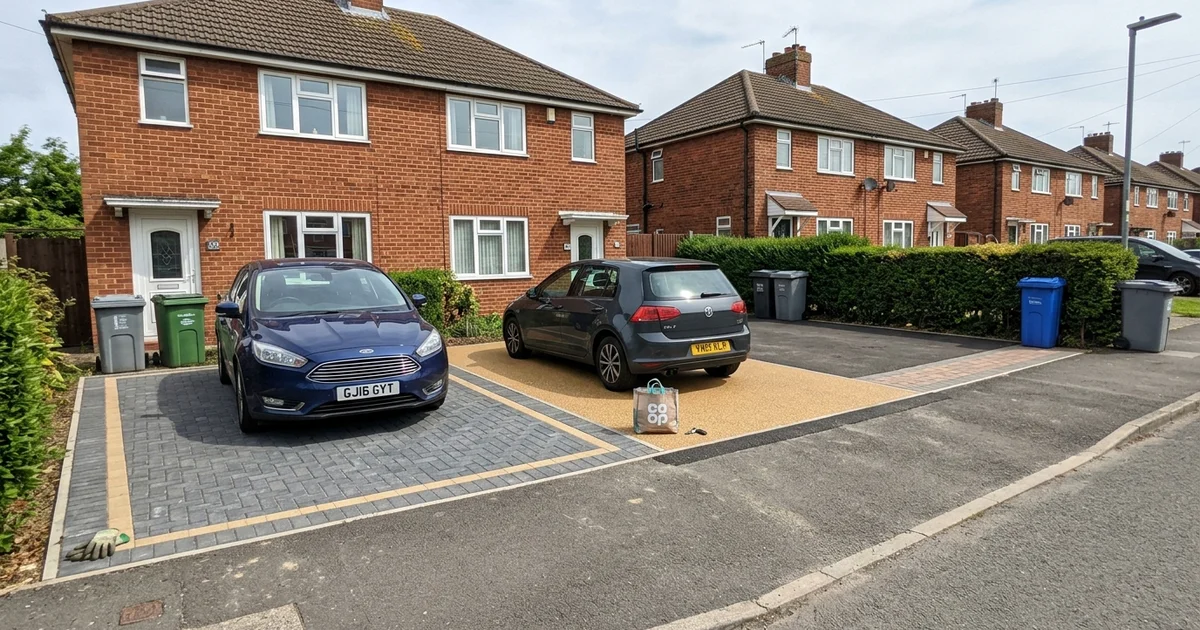
If you want the widest choice of looks and a surface you can lift and relay in years to come, choose block paving. If you want a smooth, seamless finish that drains through itself and asks almost nothing of you, choose resin. If you want the most surface for the money, especially over a large area, choose tarmac.
That is the honest summary. The longer answer is that all three are good surfaces when they are laid properly, and all three fail early when they are not, because what actually decides how long a drive lasts is the ground preparation underneath rather than the material on top. We build block paving driveways on the same excavated, compacted MOT Type 1 base that goes under our tarmac and our resin work, and that is the part of the quote worth reading carefully whichever surface you choose.
Side by side
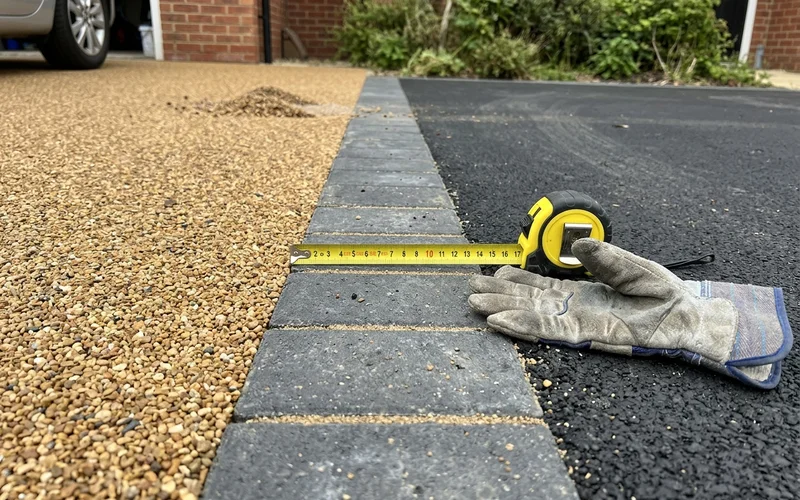
| Block paving | Resin-bound | Tarmac | |
|---|---|---|---|
| Upfront cost | Middle | Highest | Lowest |
| Typical lifespan | 20+ years | 15-20 years | 15-25 years |
| Drainage | Permeable option available | Fully permeable | Needs falls and a channel |
| Maintenance | Top up joint sand, pull weeds | Sweep and wash | Sweep, seal cracks early |
| Repairs | Lift and relay, invisible | Patch is visible | Cut out and relay section |
| Look | Traditional to modern, huge range | Smooth, seamless, contemporary | Plain, functional, quiet |
| Best for | Front drives you look at daily | Modern homes, drainage problems | Long drives, large areas |
The part most quotes gloss over
Two quotes for the same surface can differ by thousands because one includes a full excavation and a compacted sub-base and the other does not. Ask what depth is being dug out and what is going back in before you compare prices.
Cost, and what actually drives it
Tarmac is the cheapest surface per square metre, and the gap widens the bigger the area gets. On a long drive or a large parking area, tarmac often costs half what the same area would cost in resin. Block paving sits between the two. Resin is the priciest to install, partly because the material itself is expensive and partly because it needs a genuinely sound base before a single batch is mixed.
What moves any of these prices far more than the surface choice is the groundwork. Depth of dig, how much old surface has to be carted away, whether the ground is soft clay, whether drainage has to be corrected, whether access allows a digger or means barrowing everything by hand. That is why we quote after a free site survey rather than over the phone. A price given before anyone has seen your drive is a guess, and it is usually a guess that grows once work starts.
Drainage, permeability and planning
This is where the three genuinely separate. Since the rules on front gardens changed, a new non-permeable surface over five square metres that drains straight onto the road can need planning permission.
Resin driveways solve that by design. The surface is a permeable matrix, so rain passes between the coated stones and soaks away into the base underneath. No puddles, no run-off to the road, and normally no planning application.
Permeable block paving does much the same job through the joints, over an open-graded stone base. Standard block paving is not permeable, but it can drain to a border or a soakaway.
Tarmac is a sealed surface. That is not a problem in itself, it just means the falls have to be right and the water needs somewhere to go, usually an ACO channel across the threshold or a soakaway in the garden. We include that detail on the quote rather than leaving it as a surprise.
Which one suits your house
A Victorian or period home. Block paving, usually a tumbled block in a muted colour with a contrasting border. It reads as traditional, and the pattern breaks up what would otherwise be a large flat area in front of an older facade.
A modern house or a new build. Resin, in a grey or gold aggregate. The seamless finish suits clean architecture, and large-format block paving is the alternative if you want something you can lift later.
A long drive, a farm approach or a big turning area. Tarmac. Nothing else covers that much ground for the money, and tarmac driveways laid with a base course and a wearing course will take heavy vehicles year after year.
A drive that already floods. Resin, or permeable block paving, combined with drainage correction. Putting a new sealed surface over a drainage problem just gives you a smarter looking puddle.
A house you plan to sell soon. Block paving. It is the surface buyers recognise as an upgrade, and kerb appeal at the front door does more for a viewing than almost anything else you can spend the same money on.
Utilities under the drive. Block paving again, because access means lifting blocks and putting them back rather than cutting out and patching a bonded surface.
What to do next
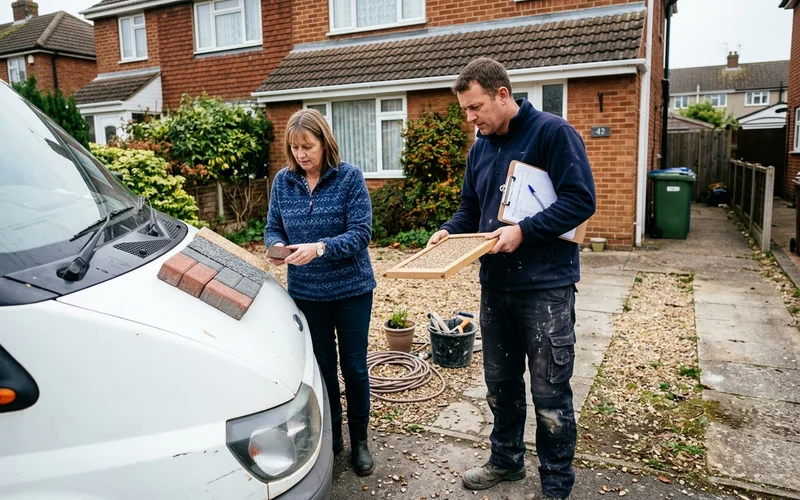
Look at the three in daylight before you decide. Colours behave differently wet and dry, and a resin aggregate that looks warm on a sample board can read grey against your brickwork. We bring samples to the survey for that reason.
Then get the specification in writing, not just the price. Depth of excavation, sub-base type and thickness, edge restraints, drainage detail and, for resin, whether it is resin-bound or resin-bonded. Those lines are the difference between a drive that is still flat in fifteen years and one that needs doing again in five.
If you would like someone who has laid all three for over 30 years to walk your drive and give you a straight opinion, the survey is free and there is no obligation. We do not ask for a deposit at any stage, so there is nothing to lose by getting a second view before you commit.
FAQ
Common questions
Which driveway material is cheapest?
Tarmac is usually the lowest upfront cost per square metre, which is why it is the default choice for long drives and large parking areas. Block paving sits in the middle, and resin is normally the most expensive to install. The gap narrows over 20 years, because most of the cost of any drive is the groundwork underneath rather than the surface on top.
Which driveway material is best for drainage?
Resin-bound is the strongest performer because it is fully permeable, so rain passes straight through the surface and drains away underneath. Permeable block paving is a close second, with water running through the joints into an open-graded base. Standard tarmac is not permeable, so it needs falls and a channel drain to take water away.
Which driveway material lasts longest?
All three last well when they are laid properly. Block paving typically goes 20 years or more and can be lifted and relaid if a section ever settles. Tarmac is built to last 15 to 25 years. Resin should manage 15 to 20 years provided the base beneath it stays sound. In practice the base, not the surface, decides which drives fail early.
Do I need planning permission for a new driveway?
If the new surface is over five square metres and drains straight onto the road, you may need planning permission or a drainage solution. Choosing a permeable surface such as resin-bound or permeable block paving, or directing water to a soakaway or border, normally keeps the work within permitted development. We confirm what applies to your property at the free survey.
Learn more about block paving driveways
See how we build block paving driveways in Gloucestershire, what's included, and how the quote works.